

Guide · Facts and travel tips
About Morocco: facts, culture and travel tips
What Morocco is known for, when to go, whether it is safe, how money and visas work and which places to see first, written by local experts in Marrakech.
- About Morocco
- Morocco facts
- Best time to visit Morocco
- Is Morocco safe
- Morocco travel tips
About Morocco
Morocco in short
Morocco is a North African kingdom on the Atlantic and Mediterranean coasts, with Rabat as its capital and Casablanca as its largest city. It is known for the Sahara dunes, the imperial cities of Marrakech and Fes, the Atlas Mountains, mint tea, tagine and lively souks. The best time to visit is spring (March to May) and autumn (September to November), the currency is the Moroccan dirham, and many visitors, including citizens of the EU, UK, US, Canada and Australia, can enter without a visa for up to 90 days.
Morocco sits at the north-west corner of Africa, only a few kilometres from Spain across the Strait of Gibraltar. In a single country you find a Mediterranean coast, the Rif and Atlas mountains, green valleys, palm oases, imperial cities and the Sahara desert.
Moroccan culture blends Arab, Amazigh (Berber), Andalusian and French influences. You hear it in the languages, taste it in the food and see it in the medinas, the architecture and the way guests are welcomed with mint tea.
This page gives you the facts and the practical answers first. If you want to see the country with a local driver and guide, our private Morocco tours start in Marrakech, Fes, Casablanca, Tangier and Errachidia.
Written by the Highlights Morocco Tours team in Marrakech
Morocco facts
What is Morocco known for?
Six things most travellers come for, with a link to the trips that cover each one.
The Sahara desert
The golden Erg Chebbi dunes at Merzouga, camel rides and nights in a desert camp.
Imperial cities
Marrakech, Fes, Meknes and Rabat, with their medinas, palaces and old madrasas.
Souks and crafts
Leather, carpets, brassware, ceramics, spices and kaftans in lively markets.
The blue town
Chefchaouen, in the Rif mountains, with its blue lanes and mountain views.
Atlas Mountains
Berber villages, valleys, waterfalls and the highest peaks in North Africa.
Atlantic coast
Essaouira, Casablanca and Rabat, with sea air, ramparts and the Hassan II Mosque.

Culture
Moroccan culture: hospitality and mint tea
Hospitality is at the centre of Moroccan culture. Guests are welcomed with mint tea, poured from a height into small glasses. Accepting a glass is a simple way to share the welcome.
The food is a highlight: tagine (slow-cooked stew in a clay pot), couscous, traditionally served on Fridays, pastilla, harira soup and fresh bread. Souks and craft workshops keep old skills alive, from leather and brass to ceramics and weaving.
Visitors are expected to dress modestly outside beach areas, to ask before photographing people and to respect prayer times and religious sites. Read our Moroccan clothing guide for what to wear.
Heritage
UNESCO sites you can visit
Five World Heritage places that fit into the classic Morocco routes.
| UNESCO World Heritage site | Where | Why visit |
|---|---|---|
| Medina of Fes (1981) | Fes | The largest car-free urban area in the world, with tanneries and madrasas |
| Medina of Marrakech (1985) | Marrakech | Souks, palaces and Jemaa el-Fnaa square |
| Ksar of Ait Ben Haddou (1987) | Near Ouarzazate | Earthen kasbahs and a classic film location |
| Volubilis (1997) | Near Meknes | Roman ruins with mosaics and a triumphal arch |
| Medina of Essaouira (2001) | Atlantic coast | A fortified port town with ramparts and fishing boats |
When to go
The best time to visit Morocco
Spring and autumn are usually the most comfortable seasons for touring and for the Sahara.
| Season | What to expect | Best for |
|---|---|---|
| Spring (March to May) | Warm days, mild nights, green countryside | Cities, mountains and the Sahara |
| Summer (June to August) | Very hot inland and in the desert, pleasant on the coast | Beach towns and high mountains |
| Autumn (September to November) | Warm days and cooler nights | Cities, the Sahara and road trips |
| Winter (December to February) | Mild days, cold desert nights, snow in the Atlas | City breaks and winter sun in the south |
Planning the desert? Read our Sahara excursion guide.
Safety
Is Morocco safe?
Morocco welcomes millions of visitors every year, and most trips go smoothly. A few habits help you enjoy it.
- Watch your belongings in crowded places and medinas.
- Agree prices before you buy, take a taxi or accept a service.
- Use official guides and book trips through licensed operators.
- Ask before you take photos of people.
- Drink bottled water and keep sun cream and a hat with you.
- Check your government's travel advice before you go.
Practical info
Money, visas and basics
Many nationalities, including citizens of the EU, UK, US, Canada and Australia, can enter Morocco without a visa for up to 90 days. Rules change, so check the official requirements before you book.
- The currency is the Moroccan dirham (MAD). Bring some euros, dollars or pounds to exchange, or withdraw dirhams from ATMs.
- Cards work in many hotels and restaurants in the cities. Carry cash for markets, taxis and tips.
- Tipping is customary: usually around 10% in restaurants, and a small tip for guides and drivers.
- A local SIM or an eSIM is easy to get on arrival, and WhatsApp is widely used.
- Ramadan changes opening hours and the pace of the day, and its dates move every year.
Morocco in pictures
Colours, flags and everyday scenes
A few images of the country you are about to visit.


Plan your trip
See Morocco on a private tour
Private trips with your own driver and a local guide. Price on request, with a free quote and no obligation.
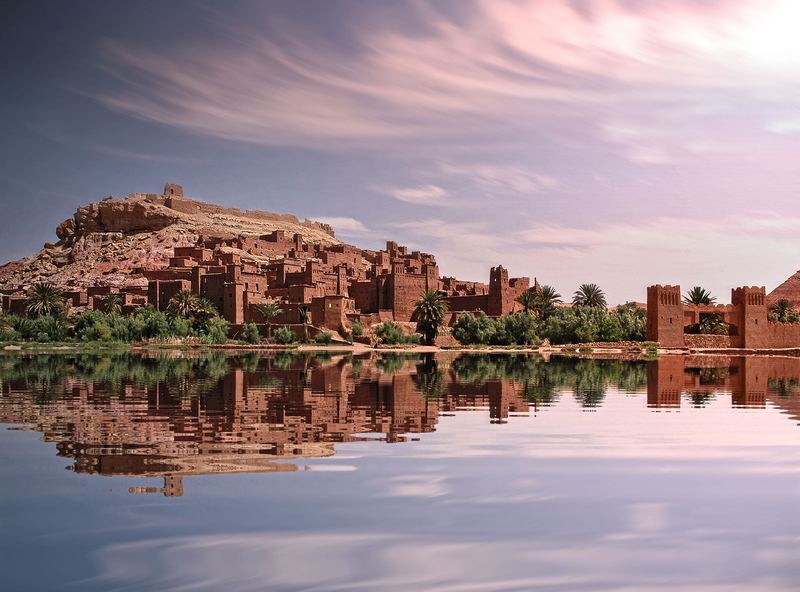
3 days · 2 nights
3-Day Marrakech to Merzouga Desert Tour
Cross the High Atlas, stop at Ait Ben Haddou and the Todra Gorges, and spend a night in the dunes.
Explore Tour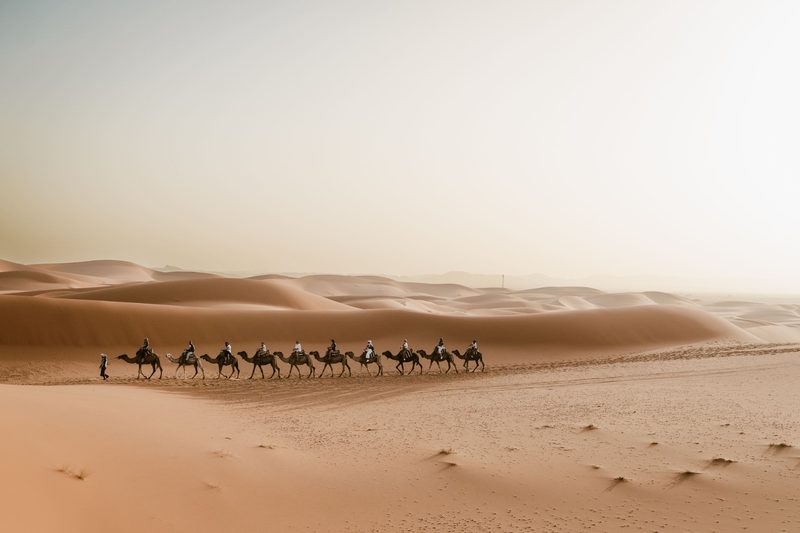
10 days · round trip
10-Day Morocco Tour from Marrakech
The best of Morocco in 10 days: Atlas, Sahara, Fes, Chefchaouen and Casablanca.
Explore Tour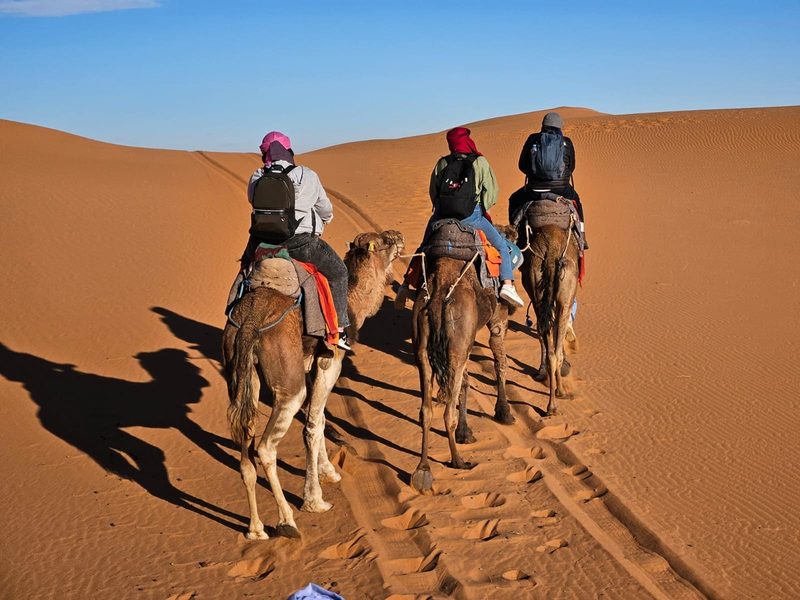
14 days · round trip
14 Days in Morocco: Private Tour from Marrakech
Two weeks around Morocco with two nights in the Sahara, Fes, the coast and Essaouira.
Explore Tour


Travelling with a big group? See our group offer. Not sure where to start? Ask us for a free quote.
FAQ
About Morocco: frequently asked questions
Short answers to the questions travellers ask us most about Morocco.
What is Morocco known for?
Morocco is known for the Sahara desert and the Erg Chebbi dunes, the imperial cities of Marrakech, Fes, Meknes and Rabat, the blue town of Chefchaouen, the Atlas Mountains, its souks and crafts, mint tea, tagine and couscous.
Is Morocco safe for tourists?
Morocco is a popular destination and most visitors travel without problems. Use common sense: watch your belongings in crowded places, agree prices before you buy or take a taxi, use official guides and check your government's travel advice before you go. A private driver and local guide make the trip easier.
What is the best time to visit Morocco?
Spring (March to May) and autumn (September to November) are usually the most comfortable for cities, mountains and the Sahara. Summer is very hot inland and in the desert, and winter nights in the Sahara and the Atlas are cold. The coast is mild most of the year.
What currency is used in Morocco?
The Moroccan dirham (MAD). Cards are accepted in many hotels and restaurants in the cities, but you need cash for markets, taxis, small shops and tips. Withdraw dirhams from ATMs or exchange money at banks and exchange offices in Morocco, and check the rate before you change.
Do I need a visa for Morocco?
Many nationalities, including citizens of the EU, UK, US, Canada and Australia, can enter Morocco without a visa for up to 90 days. Rules change, so check the official requirements and your passport validity with the Moroccan embassy or your government's travel advice before you book.
What languages are spoken in Morocco?
The official languages are Arabic and Amazigh (Berber). Moroccans also speak Darija, a local Arabic dialect, and French is widely used in business and tourism. English is common in tourism, and Spanish is spoken in the north. Our guides speak English and Spanish.
What is the capital of Morocco?
Rabat is the capital. Casablanca is the largest city, Marrakech and Fes are the best-known tourist cities, and Tangier is the main gateway from Europe.
What should I wear in Morocco?
Choose light, loose clothes that cover your shoulders and knees, especially in medinas, villages and religious areas, and carry a scarf. Bring a warm layer for evenings and the desert. We explain it in detail in our Moroccan clothing guide.
How many days do I need in Morocco?
A short stay of 3 to 4 days can cover Marrakech and a Sahara trip. With 8 to 10 days you add Fes, Chefchaouen and the coast, and 14 days lets you see the main regions at a relaxed pace. We adapt each tour to your dates.
What is the best way to travel around Morocco?
Distances are long and mountain roads are slow, so many visitors choose a private driver with a local guide. Trains are good between Tangier, Rabat, Casablanca and Marrakech, but they do not reach the Sahara or the mountains.
What food should I try in Morocco?
Try tagine, couscous (traditionally served on Fridays), pastilla, harira soup, grilled meats, fresh bread and mint tea. Food markets, riads and local restaurants are a big part of the experience.
How do I book a Morocco tour with Highlights Morocco Tours?
Send us your dates and number of travellers with the contact form, by WhatsApp or by email. We reply with a free, no-obligation quote and, when you are happy with it, we confirm the booking.
Plan your Morocco trip with local experts
Tell us your dates and what you would like to see. We reply with a free, no-obligation quote.
Contact Us
Plan your private Morocco trip
Tell us your dates and what you would like to see. We will reply with a free, no-obligation quote.
-
WhatsApp
-
Based in
Marrakech, Morocco
-
Support
Available 24/7 while you travel